
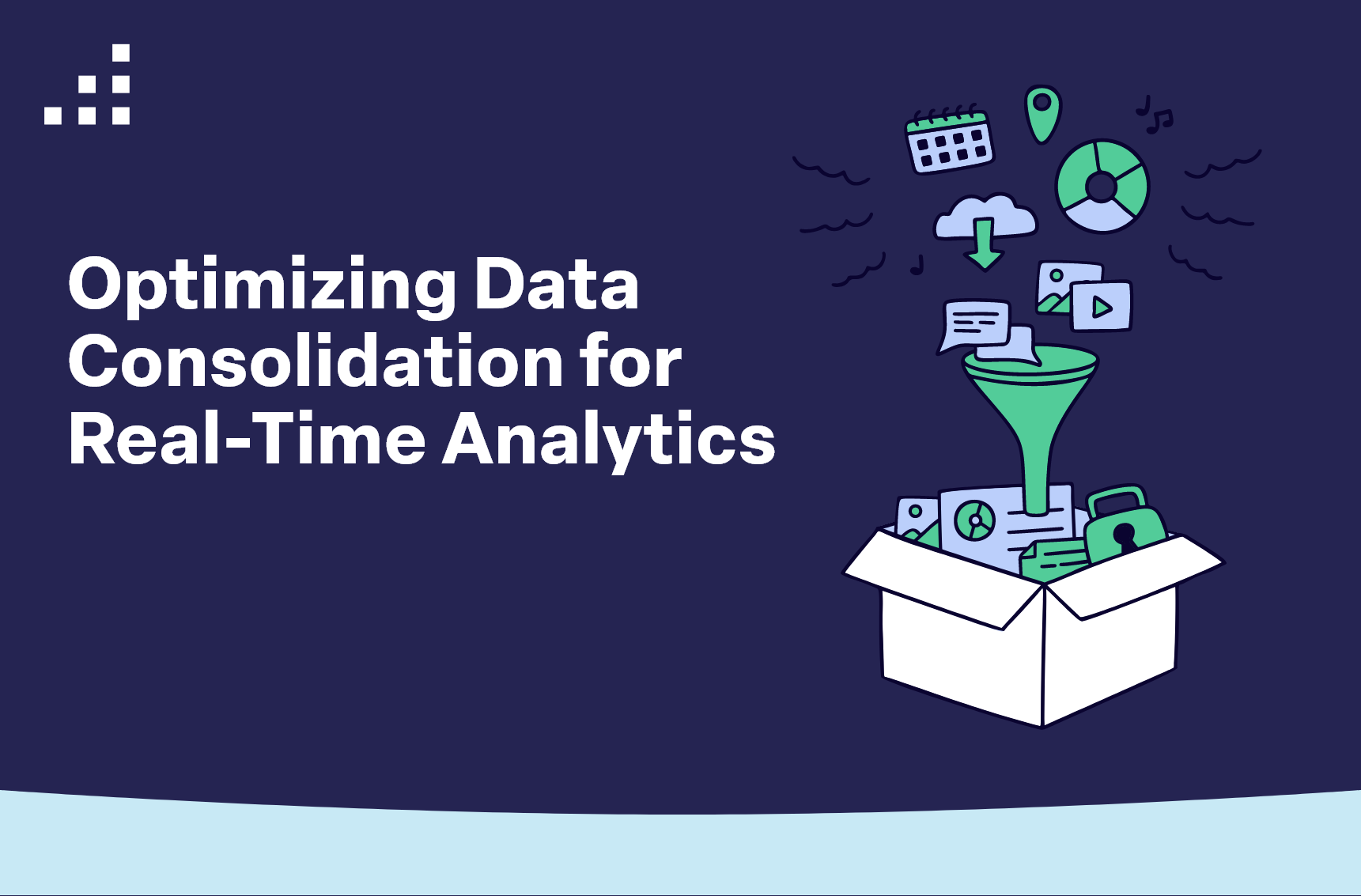
The speed at which you can access and act on insights is a major competitive advantage. While traditional reporting systems are useful for historical analysis, modern businesses require real-time data to respond to opportunities and risks immediately. This is where data consolidation for real-time analytics becomes critical.
Without clean, centralized data flowing consistently across platforms, real-time analytics is impossible to scale. Optimizing your consolidation process ensures data is not only accurate and complete—but also instantly accessible.
In this article, we’ll explore:
What is Data Consolidation for Real-Time Analytics?
Challenges of Achieving Real-Time Analytics Without Consolidation
Key Strategies for Optimizing Data Consolidation for Real-Time Analytics
How BUCS Analytics Powers Real-Time Analytics with Consolidated Data
Speed + Accuracy = Strategic Advantage
What Is Data Consolidation for Real-Time Analytics?
Data consolidation for real-time analytics refers to the continuous collection, unification, and validation of data from various systems into a centralized environment that updates automatically.
Rather than relying on static reports or manual spreadsheets, real-time analytics platforms leverage consolidated data to:
- Trigger automated alerts
- Support predictive modeling and forecasting
- Drive proactive business decisions
Challenges of Achieving Real-Time Analytics Without Consolidation
Many businesses struggle to achieve real-time visibility because their data remains siloed across:
- ERP, CRM, and accounting systems
- Spreadsheets and legacy databases
- Inconsistent data structures and naming conventions
These issues lead to:
- Delayed reporting
- Manual reconciliation
- Incomplete or inaccurate insights
- Operational inefficiencies and missed opportunities
To overcome this, businesses need a consolidation process optimized for speed, accuracy, and integration.
Key Strategies for Optimizing Data Consolidation for Real-Time Analytics
1. Automate Data Ingestion and Sync
Manual exports are slow and prone to errors. Use APIs that pull data automatically from your systems into one platform.
2. Standardize and Clean Data on Entry
Apply logic that aligns naming conventions, formats, and field types. This prevents reporting errors and enables fast processing.
3. Enable Dashboards and Alerts
Use BI tools or platforms that surface key metrics instantly. Set alerts to notify stakeholders of thresholds, anomalies, or trends.
4. Establish Data Governance Frameworks
Define roles, ownership, and data access permissions. Strong governance ensures accuracy, accountability, and regulatory compliance.
5. Use Scalable, Cloud-Based Infrastructure
Cloud platforms allow you to scale data consolidation efforts without compromising performance or flexibility.
How BUCS Analytics Powers Real-Time Analytics with Consolidated Data
BUCS Analytics is built to optimize data consolidation for real-time analytics. It connects to your ERP, CRM, and accounting platforms through automated synchronization, continuously pulling in data so that your dashboards are always current. During the import process, BUCS applies cleansing and validation rules to ensure high data accuracy.
Once the data is consolidated, BUCS delivers instant, actionable datasets that update in real time without the need for manual refreshes. Whether you’re monitoring financial KPIs or operational performance, decision-makers can act on the latest insights with confidence.
To reinforce compliance and governance, BUCS includes role-based access controls and full audit trails. Every user interaction and data change is tracked, supporting accountability and data security across the organization.
Speed + Accuracy = Strategic Advantage
When you combine speed with trustworthy data, you get a strategic advantage that can shape everything from daily operations to long-term planning.
With BUCS Analytics, you’re not just consolidating data—you’re transforming it into a real-time decision engine.
See how BUCS delivers real-time data consolidation and analytics for forward-thinking businesses. Learn More at BUCS Analytics
